
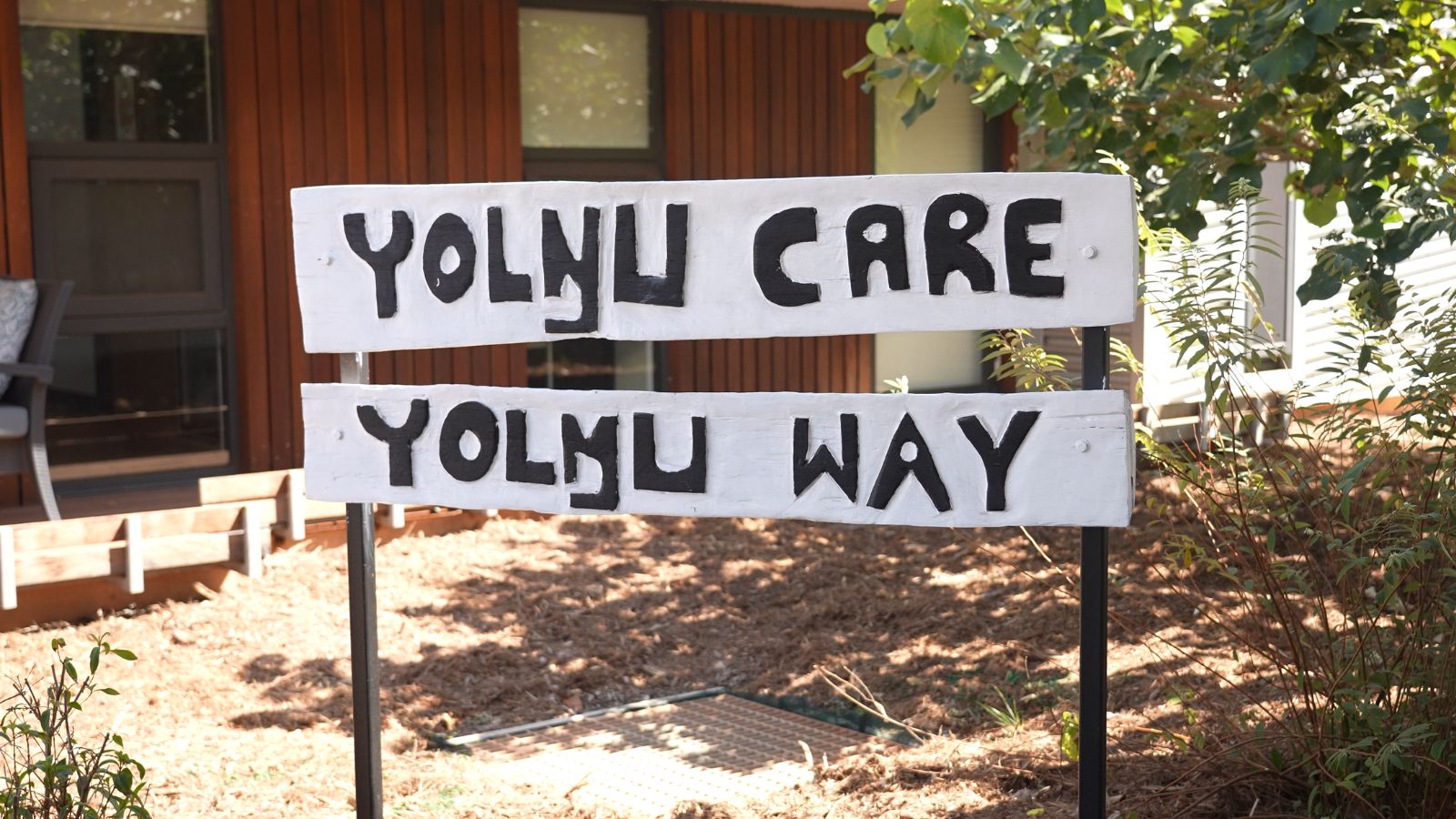
We would like to acknowledge and thank the Elders and staff of Yutjuwala Djiwarr Flexible Aged Care in Nhulunbuy for letting us into their home and workplace and for sharing their stories.
A reflection by Jaina McIntyre, Project and Engagement Officer and Proud Dharawal woman.
As part of the work we do here at The Social Deck, we have the privilege of visiting and talking with people from around Australia. While I love this work, I’ve often come to expect formal meetings, large workshops and seeing the inside of lots of hotel rooms – some other engagement people might relate well to this.
But while working with the Aged Care Quality and Safety Commission (the Commission) recently, I was lucky enough to visit beautiful Yolŋu Country, Nhulunbuy to talk to some elders and aged care staff. I could not have imagined how special this experience would be – how gorgeous the Country and the people would be. I’d wake up excited about who my next meeting was with. This work trip changed how I think, both professionally and personally.
Quality and safety in First Nations aged care
For a bit of context. The new Aged Care Act, which started on 1 November 2025, is about putting the rights of older people first. The new Act is supported by strengthened Quality and Safety Standards, managed by the Commission.
I was part of the team at The Social Deck who began working with the Commission in 2024, to help our community and sector get ready for the changes. One of our roles was to communicate how the new strengthened standards will improve culturally safe aged care for First Nations people. This included helping First Nations older people understand their rights, as well as demonstrating to aged care workers and providers who care for First Nations people what culturally safe care looks like in practice.
From the beginning, we established a process to co-design resources and have direct community involvement in them. This is what eventually led me to Nhulunbuy.
Touching down in the Top End
Nhulunbuy is a gorgeous little town nestled on the northern tip of East Arnhem Land. Hemmed by stunning beaches and water, no written description could do it justice.
After a bumpy landing into Gove airport, the Nhulun-girls: Vikki – our First Nations Engagement Manager, Casey – Production Manager, and I jumped into our slightly above 1000°c rental car and were off. We headed to Yutjuwala Djiwarr Flexible Aged Care to speak to some Yayas and Wawas (Yolŋu for ‘brother’ and ‘sister’), as well as staff, to ask them what good care looked like, and to get feedback on co-designed resources we had developed in an earlier phase of work. The resources were about showing what good culturally safe aged care looks like.
So, what is culturally safe aged care? There isn’t one definitive answer, but we saw some great examples during our trip.
When it feels like home
Some aged care homes can feel more clinical than homely. But Yutjuwala Djiwarr, meaning ‘Little Heaven’ immediately feels like home the second you walk through their gate.
Something that stood out to me was that every detail of Yutjuwala Djiwarr had been co-designed with culture in mind. The building itself is shaped like a seagull or seaturn when viewed from above – a deliberate nod to the Country it sits on. The buildings are lined with corrugated iron and sheltered by a central shade structure, which echoes that form, so even the way you move through the place feels seamless and connected.
Surrounding the buildings are bush medicine plants and bushtucker gardens, planted before construction even began. These aren’t just decorative but living, breathing parts of the daily life of the residents here. Having them right there, just outside the door, is a simple but powerful way of showing ‘culture belongs here’.
Keeping connection with community and Country
While we were engaging with community and the residents, I was invited to go along in the bus with the Yayas and Wawas to visit one of the numerous lovely beaches and celebrate a Yaya’s birthday in her family home.
For a lot of First Nations people, family is everything and so is ‘home’. We feel a great pull to our Country and for Yaya to be able to spend her birthday with the people most important to her and in her own home, was a great example of culturally safe care.
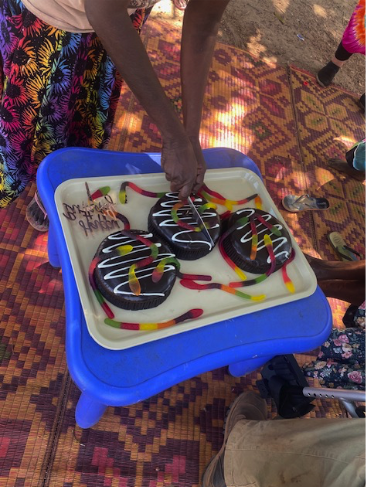
After some happy birthday singing and dancing, and some much needed cordial, we headed to the beach. I had already had so much fun singing happy birthday and watching family and friends come together. It was truly emotional and gratifying seeing the Elders celebrating in their own home, surrounded by their loved ones. Going on to enjoy their effervescent company at the beach was the cherry on top.
This small bus ride was no ordinary bus ride. I felt like I was back in school, going on an excursion. Everyone was singing and dancing along to ABBA and Elvis, including me. I had to grab my face at one point and pull my cheeks because they were starting to hurt from smiling and laughing so much.
When we arrived at the beach, we grabbed a couple of camp chairs, a picnic blanket and a small pop-up table and had some afternoon tea. We settled down to enjoy the music, the breeze and that gorgeous water, before picking up the Yayas and heading back for afternoon tea.
Though I had the time of my life on that bus, the important thing to think about here is how important this is to the work we do when engaging with First Nations people. We lean on opportunities to listen, connect, learn and build relationships - before, during and after engagements. This makes things less transactional and more about connection and understanding. It leads to better yarns which means better outcomes for the project and the communities they impact.
Settling back into Yutjuwala, we polished off the lunch leftovers while learning the story of how the aged care facility was developed.
Lessons to last a lifetime
I learned that Yutjuwala Djiwarr Flexible Aged Care is a great representation of what culturally safe care can be. From the first native trees and shrubs planted for weaving, traditional medicine and bushtucker, to now having the opportunity to take excursions to family homes, the beach and even fishing. Seeing how cheerful and full of life the Yayas and Wawas at Yutjuwala Djiwarr were, made me happy.
I brought back a deeper understanding of what it truly means to care for someone and it reminded me that the best work we can do, starts with listening. When care is built on culture, community and respect, it doesn’t just sustain people, it lets them flourish.
To say goodbye, I’d like to leave you with this lovely statement translated into English from Yolŋu which hangs in the entry building at Yutjuwala Djiwarr:
‘The Centre is called Yutjuwala Djiwarr, which means “Little Heaven”. The Beak of the seagull beckons all residents and visitors right across Arnhem Land to the centre, where it is safe for all those that come for a rest.'
Watch a video we produced at Yutjuwala Djiwarr below, and head to the First Nations Hub to see more co-designed resources.

Read more posts
2025 Annual Snapshot
January 14, 2026
.jpg)
What we’re watching, listening to and reading – Harmony Week
March 23, 2022


